Stimulate repair within selected scar depressions.
Consultation-led aesthetic medicine · Brighton & Hove · By appointmentConsultation-led · Brighton
SCARS · DEPTH · PRECISION
TCA CROSSFocused treatment for selected indented scars.
For the small, deep pits that remain after acne has cleared.Treating the inside of each scar can make it shallower and less noticeable.
At a glance
Focused treatment.
For indented scars.
Small, deep scars and selected scars with defined edges.
Treat selected pits rather than peeling the whole face.
Assess the change after healing across a planned course of treatment.
Quick overviewYour appointment at a glance
- Appointment
- 90 minutes for TCA CROSS. A separate consultation is required before your first treatment.
- Consultation
- 60 minutes. The consultation fee is credited in full towards a future treatment.
- Fee
- The proposed treatment plan and cost are explained at your consultation. View consultation fees.
- Preparation
- Your plan covers skincare, sun protection and any products to pause before treatment.
- Recovery
- Small crusts form at the treated points and commonly separate during the following week. Pigment changes may last longer.
- Course and booking
- More than one session is planned, with healing and response reviewed between treatments. Choose your appointment.
Which scars suit CROSS?
The shape beneath the skin helps explain why different scars need different treatments.
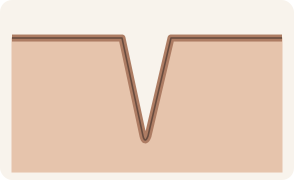
Ice-pick
Often suited to CROSS
A small opening with a deep, narrow pit.
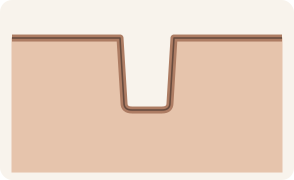
Narrow boxcar
Selected scars may suit CROSS
A narrow depression with defined edges.
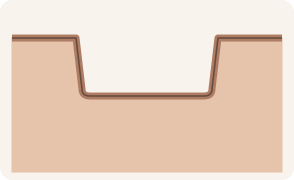
Wide boxcar
Often needs another approach
A broader depression; width and depth guide the choice.
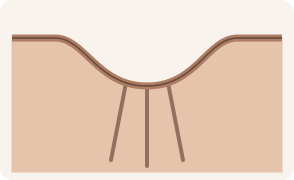
Rolling
Usually needs another approach
A broad dip, often held down by bands beneath the skin.
Simplified cross-sections, not to scale. Many people have a mixture of scar types, so treatment may combine more than one method.

The complete conversation
Your questions about
TCA CROSS
Which acne scars TCA CROSS may improve, how focused treatment works, and what healing and gradual results involve.
odNOVA guide
- 1You
- 2Piotr
- 3Clinical
- 4In depth
Choose a question
Which acne scars can TCA CROSS help?Piotr answers
Piotr
TCA CROSS is used for ice-pick scars and selected narrow boxcar scars. Ice-pick scars are small, deep pits; boxcar scars have more clearly defined edges. I assess each scar’s shape, depth and attachment to determine whether CROSS is appropriate.
Which scars may be suitable?
I check whether each mark is an actual depression, and whether its shape and depth suit focal treatment. Active acne should be controlled, the skin settled, and your pigment and healing history considered. I also consider the preparation, recovery and sun protection involved, and discuss whether the likely improvement meets your expectations.
Published evidence mainly concerns atrophic acne scars. Other scar causes are assessed separately and are not automatically included.
Is it suitable for rolling scars?
Usually not as the main treatment for a rolling scar held down by bands beneath the skin. Subcision releases those bands; it or another treatment may address the cause more directly than applying acid to the surface.
How does TCA CROSS work, and will the scar disappear?Piotr answers
Piotr
TCA CROSS stimulates repair and collagen remodelling within individual scars. With healing, a suitable scar may become shallower and less noticeable. Improvement develops gradually, often over a course of treatments; the aim is improvement rather than complete removal.[8]
What TCA CROSS is intended to do
CROSS means chemical reconstruction of skin scars. The intended response is concentrated at selected depressions while avoiding unnecessary injury to the surrounding skin. The skin’s repair response can alter the contour of a scar over time.[7][8]
A series may be considered, but further sessions follow healing and assessment of the result. A scar becoming wider, more noticeable or more atrophic is a possible adverse outcome that I explain before you decide to proceed.
How much improvement is realistic?
The aim is a shallower, less noticeable scar, rather than perfectly smooth skin. Studies have reported substantial improvement in some patients after a series, but they used different scar types, methods and rating scales. The research section shows the actual results and their limits.
At assessment, I explain which of your scars are likely to respond and which may need another approach. I compare photographs after healing and discuss the result with you before recommending further treatment.
Does TCA CROSS use the same acid as a TCA peel?
Yes. Both treatments use trichloroacetic acid (TCA).
TCA resurfacing treats a broader area of skin to improve rough texture and uneven pigmentation.
TCA CROSS uses a higher concentration, applied precisely inside selected individual scars. The stronger solution is confined to those scars, rather than spread across the surrounding skin.
Can I do TCA CROSS at home?
No. TCA CROSS requires clinical assessment and precise application. Applying acid yourself can injure surrounding skin, deepen a scar or cause lasting pigment changes and further scarring.
How do I prepare, and how is a treatment plan agreed?Piotr answers
Piotr
Your first step is a separate consultation. We will look at your scars together and discuss the improvement you would like to see. I will explain which scars CROSS may help, any preparation needed and what recovery involves.
Your experience of previous treatment, healing and pigmentation will help shape the plan.
What happens during the consultation?
- Scar assessment. I distinguish ice-pick, boxcar and rolling scars from active acne and flat pigment marks.
- Suitability. Your pigment, healing and treatment history helps determine whether focal treatment is appropriate.
- Plan and consent. I explain the proposed treatment sites, expected improvement, limitations, alternatives, material risks and aftercare. You can ask questions before deciding whether to proceed.
- Follow-up. We discuss how I will assess your progress after healing and use your response to guide the next treatment.
I will explain what each appointment includes, how review is arranged and the cost of the proposed treatment plan.
How many treatments will I need?
At odNOVA, I plan TCA CROSS as a course of more than one session. The studies below used three to six sessions, but this is not a fixed number for everyone: each person’s scars and healing response are different.
Sessions are usually planned four to six weeks apart. The next treatment may need to be later if the skin has not healed or remains irritated.
Preparing your skin
I will send you a preparation plan covering your skincare, sun protection and any products to pause. A history of cold sores may mean preventive treatment is needed.
Active acne needs to be controlled before treating the scars. If a cold sore, sunburn, irritation or a change in your health develops before your appointment, please get in touch so we can review the timing. Prescribed medicines should only be changed on your prescriber’s advice.
Your written aftercare will explain how to care for the treated points while they heal. You are welcome to ask me about anything that is unclear.
What happens on the day?
Allow 90 minutes for your appointment. I recheck your skin and the agreed scars, prepare the area and apply treatment to those individual points. The treatment is confined to the selected scars. When scars are very close together, I may recommend treating them in separate sessions. This helps me avoid treating the narrow areas of healthy skin between them.
The treated points turn white as the acid reacts with proteins in the skin. This is called frosting, and I monitor it during application.[14]
You leave knowing how to care for the sites, when to seek advice and how I will review healing.
What does TCA CROSS feel like?
Brief stinging or burning can occur. I explain comfort measures before starting and check how you feel during treatment.
Do medicines, pregnancy or previous treatments matter?
Yes. We will go through these together. This includes prescription medicines, supplements, allergies, oral isotretinoin and retinoids applied to the skin, previous peels, laser or other procedures, and any tendency to develop raised scars or dark marks after irritation. If you are pregnant, breastfeeding or trying to conceive, please include this in your medical history so I can assess the proposed treatment and preparation products.
Some of these details change the treatment or its timing. Do not stop prescribed medicines yourself. If your skin or health changes after completing the form, let me know.
Appointments at odNOVA are for adults aged 18 and over.
Why are photographs taken?
Photographs record your skin before treatment.
I use consistent lighting and views to assess your progress, discuss the results with you and adjust your treatment plan if needed. These photographs form part of your clinical record.
Why might I need preparation creams before TCA?
Preparation can help reduce the risk of dark marks after treatment. The inflammation involved in healing can increase pigment production. For some people, skincare in the weeks before TCA helps manage that response; others need irritation to settle before treatment.
I choose the preparation around your skin, previous pigment changes and planned treatment. This may include prescribed pigment-control skincare and sun protection; I explain the products and timing at your consultation.
Khunger’s small study used pigment-control preparation and sun protection before CROSS. Temporary pigment changes still occurred; it had no unprepared comparison group, so it cannot tell us how much preparation reduced the risk. Read the research paper
The full study below explains the preparation, treatment course and recorded pigment changes. Full study details
How long do the small crusts last, and can I carry on with normal life?Piotr answers
Piotr
Small crusts form at each treated scar and commonly separate during the following week. Surrounding skin is not treated as a whole-face peel. The crusts can be visible, so allow for that when arranging work and social plans.
Let them separate naturally and follow your written aftercare. Pinkness or pigment changes can last longer; I assess the result after healing and collagen remodelling have had time to develop.
When can I wash my face or shower?
The timing of your first wash is agreed individually. If a 24-hour dry period is advised, this also applies when showering. Once washing is allowed, cleanse gently with a mild cleanser and pat dry. Do not rub or scrub the crusts; let them separate on their own.
When can I wear make-up again?
Keep make-up off the treated points for at least one week. Wait longer if crusts remain or the skin underneath has not healed.
Can I shave while the treated areas are healing?
Do not shave the treated areas while crusts are present. Even after they have fallen away, the newly healed skin needs care. When shaving can resume depends on how your skin has healed; there is no fixed day that suits everyone.
What recovery may look like
Tenderness, warmth, local redness and swelling may occur early on.
Let crusts separate without picking, pulling or scrubbing.
Newly healed skin may look pink for several weeks, so a treated scar may temporarily be more noticeable. In one study, mild redness settled within 2–8 weeks.[7]
Work and social plans depend on visibility, comfort and the demands of the activity. Use the written care plan for cleansing, moisturising, sun protection and restarting makeup or active skincare. Do not cover an open or irritated treated site to meet an event date.
If you have a holiday or important occasion coming up, we can choose a date that allows time for the crusts and colour changes to settle.
Persistent redness, darker or lighter pigment and delayed healing can occur. Contact the clinic if healing is not following the pattern explained. The final scar change is assessed later, after the skin has settled.
When can I judge the result, and will it last?
Do not judge the scar while it is swollen or crusted. Early swelling can temporarily make it look shallower. I assess the change after healing and allow time for remodelling between treatments.
Lee et al.: 82% with 65% TCA and 94% with 100% TCA reached a good-or-excellent response. That was 27 of 33 and 30 of 32 patients, assessed six months after three to six sessions. In the study’s photographic categories, this meant at least half of the scar lesions were judged to have disappeared; it was not a measurement of scar depth. Read the full Lee study explanation.
Khunger et al.: 22 of 30 patients (73.3%) reached the category of more than 70% reduction in scar count after four sessions. At the three-month follow-up, one patient reported that some improvement had diminished; the paper did not provide a complete new set of scar counts at that visit. Read the full Khunger study explanation.
These percentages describe how many participants reached a result category, not the average improvement in every scar. Both studies were small and lacked an untreated comparison. Their follow-up supports assessing change over months, but does not establish a lifetime result. New acne can also cause new scars.
When can I restart retinol, acids or other active skincare?
Your written aftercare will give you the restart timing for your own treatment and products. Even after peeling stops, your skin can still be sensitive. Retinol, exfoliating acids and some vitamin C products can irritate skin that is still recovering.
We will go through your skincare together so you know which products to pause and when to reintroduce them. If your skin is still sore, red or stinging, please check with me before restarting. Do not change prescribed treatment without advice from the clinician responsible for it.
When might microneedling, subcision or another treatment be better?Piotr answers
Piotr
A broad rolling scar may be held down by fibrous tissue beneath the skin and benefit from subcision, which releases that attachment. Microneedling may suit more widespread, shallower texture changes. Resurfacing or a combination of treatments may be useful when different scar types occur together. I explain which approach addresses your scars.
When another route may fit better
- Rolling or tethered scars may need a treatment that addresses attachment beneath the scar.
- Broad or shallow boxcar scars may suit another resurfacing or combination approach.
- General surface texture may need treatment across a wider area.
- Active inflammatory acne should usually be controlled before scar correction becomes the priority.
- Brown or red marks without structural change are not atrophic scars.
- Severe or diagnostically uncertain scarring may require specialist dermatology.
Alternatives may include no treatment, camouflage, microneedling, subcision, laser treatment, punch techniques, selected injectable support or a staged combination.
Can TCA CROSS be used on darker or pigment-prone skin?Piotr answers
Piotr
TCA CROSS may be suitable after an individual assessment of skin tone, pigmentation and healing history. I use that assessment to plan preparation, which may include prescribed topical treatment for pigment-prone skin, and aftercare. Pigment changes can still occur and may be more persistent in darker skin.
Pigment risk changes the plan
Any skin tone can develop dark marks after inflammation (PIH), with a greater tendency in darker skin tones. After TCA CROSS, these marks can last beyond the initial healing period.[6]
I also consider previous PIH, melasma, active inflammation, recent tanning or sunburn, medicines, earlier reactions and whether reliable photoprotection is realistic. The 2026 review reports studies in Fitzpatrick types I–V. Its findings cannot establish the same benefit or risk for type VI skin; individual assessment is essential.[8]
Broad-spectrum UVA and UVB protection is part of preparation and recovery. It cannot guarantee pigmentation will not occur. Do not pick, pull or scrub attached skin.
What if I have had dark marks after acne or an injury?
It helps to know how easily your skin develops dark marks and how long they usually last. Your experience gives me a fuller picture than skin colour alone. I explain how preparation and sun protection reduce risk, and discuss the expected scar improvement alongside the possibility of temporary or persistent colour change.
What is a skin phototype, and why does it matter?
A skin phototype describes how skin tends to burn or tan in sunlight. Research often uses the Fitzpatrick categories I–VI. They help describe who was studied; they are not a personal safety score. DermNet explains the classification.
I also ask whether spots, scratches or previous treatments have left dark marks and how your skin healed. Those details help decide the treatment depth and preparation. You do not need to know your category before the consultation.
What does the evidence actually show?Piotr answers
Piotr
CROSS can make selected indented scars less noticeable over a course. In one 30-person ice-pick-scar study, 22 people (73.3%) reached the authors’ excellent category after four treatments. That category measured scar count, not perfectly smooth skin.[9]
Results were more modest in another study: two weeks after three treatments, 4 of 15 CROSS patients were rated as having 50–74% improvement in photographs, and none reached the highest improvement category.[11]
The studies treated different scar patterns and measured improvement differently, so these percentages are not directly comparable. The research below explains what each study found and how it may relate to your skin.
Research and results
Eight TCA CROSS studies and one broader-area peel study: scar improvement, patient satisfaction and adverse effects. Open each study for its protocol, limitations and original publication.
Most of these CROSS studies are small, and scar types, concentrations and scoring methods differ. Several have no untreated comparison, and follow-up is measured in months rather than years. The results support considering CROSS for selected scars, but do not establish one success rate or a lifelong result for every patient.
Each study below explains the scar types treated, how improvement was measured and how long patients were followed.
Lee et al. (2002) · Atrophic scars · 65 participants
82% in the 65% TCA group and 94% in the 100% TCA group reached the study’s good-or-excellent improvement category.
Study details and original results
Who was studied? 65 Korean patients with skin phototypes IV–V: 33 received focal 65% TCA and 32 received 100% TCA. Allocation was not randomised.
Treatment and timing. Three to six CROSS sessions; photographs assessed by two blinded physicians six months after the course.
What was measured? 27 out of 33 and 30 out of 32 respectively were judged to have at least 50% of lesions disappear under the study’s categories. These are proportions reaching a category, not average scar-depth reductions. Separately, 16 out of 33 and 19 out of 32 were absolutely satisfied; 11 in each group were moderately satisfied. Mild pustular eruptions occurred in 4 out of 65 (6.2%, about 1 in 16).
What limits this result? Different session counts and non-random allocation prevent a reliable concentration comparison. The findings concern selected scars and do not establish lifetime durability or zero risk of permanent pigment change.
Agarwal et al. (2015) · Atrophic scars · 53 participants
The abstract reports that 66% reached a good-or-excellent improvement category and 81.1% were satisfied or very satisfied.
Study details and original results
Who and what? 53 people with indented acne scars received focal 70% TCA every two weeks. A three-month follow-up is reported.
What improved? 66% reached the authors’ good-or-excellent category, defined as more than 50% improvement, on physician and patient assessments. Satisfaction was a separate measure: 81.1% were satisfied or very satisfied.
What limits this result? Only the abstract was available for verification. It does not give the full scoring method, number of sessions, starting point of the three-month follow-up or detailed side-effect rates. These results cannot establish a personal success rate or long-term durability.
Nofal et al. (2014) · Improvement and satisfaction · 45 participants
4 out of 15 patients treated with CROSS were assessed as having 50 to 74% improvement in photographs. Separately, 9 out of 15 rated their satisfaction as very good or excellent.
Study details and original results
What this means in practice. Patient satisfaction and visible improvement are different outcomes. This trial measured both rather than treating them as interchangeable.
Who was studied? 45 people randomised to CROSS, PRP or microneedling plus PRP; 15 per group. The CROSS arm included phototypes III–V and a mixture of ice-pick, boxcar and rolling scars.
Treatment and timing. Three focal 100% TCA CROSS sessions at two-week intervals. Two blinded dermatologists compared photographs two weeks after the final session; follow-up continued for two months.
What the study found. Blinded photographic ratings after CROSS: 4 out of 15 at 50 to 74% improvement, 5 out of 15 at 25 to 49%, 6 out of 15 below 25%; none above 75%. Patient satisfaction was excellent in 6 out of 15, very good in 3 out of 15 and good in 6 out of 15. The three active-treatment groups did not differ statistically; this small trial did not establish equivalence.
Recovery and adverse effects. Mild procedural pain occurred in 15 out of 15. Pigment darkening affected 4 out of 15 (26.7%, about 1 in 4), all four in the very small phototype-V subgroup. That subgroup cannot establish a reliable risk for everyone with that skin type. Crusts lasting 2–7 days were described in an unspecified number; practical downtime was not measured.
What limits this result? Only 15 CROSS patients, subjective photographic categories and no untreated comparison. No further clinical improvement was reported during the two-month follow-up; longer durability was not studied. The primary tables distinguish patient satisfaction from clinician-assessed response.
Khunger et al. (2011) · Ice-pick scars · 30 participants
22 of 30 patients (73.3%) reached the excellent category: more than 70% reduction in scar count.
Study details and original results
Who was studied? 30 Indian patients with skin phototypes IV–V and ice-pick acne scars; an uncontrolled study.
Treatment and timing. Four focal 100% TCA CROSS sessions, with hydroquinone/tretinoin preparation and sun protection; a three-month follow-up was included.
What was measured? The endpoint was scar count, not depth or completely smooth skin. Temporary darkening occurred in 2 out of 30 (6.7%, 1 in 15), lasting one week; temporary lightening in 1 out of 30 (3.3%, 1 in 30), lasting six days. Most crusts lasted 3–4 days; two patients took six days.
What limits this result? No untreated comparison and no blinded assessment. One patient reported reduced improvement at follow-up; the study does not provide a reliable lifetime durability estimate. Zero persistent events in 30 people cannot establish zero risk.
Amin et al. (2018) · Ice-pick scars · 60 participants
52 out of 60 patients (86.7%) had a reported reduction in scar count of more than 50%, assessed three months after four sessions.
Study details and original results
Who was studied? 60 patients aged 16–35 with moderate or severe ice-pick acne scarring. Each had at least 26 scars; there was no comparison group.
Treatment and timing. Four focal 100% TCA CROSS sessions at two-week intervals, with preparation and aftercare. Scars were counted and photographed three months after the final session.
What the study found. 25 out of 60 patients (41.7%) were in the category of more than 70% reduction in scar count; 27 out of 60 (45%) had 51 to 70% reduction; and 8 out of 60 (13.3%) had 30 to 50% reduction.
What these percentages mean. 86.7% is the proportion of patients in the two higher response categories. It is not the average improvement, and scar-count reduction does not measure how much shallower each scar became.
Recovery and adverse effects. Temporary pigment darkening was reported in a few patients, but the authors did not give a number. The frequency of this reaction and practical downtime therefore cannot be calculated.
What limits this result? No untreated comparison, no reported blinded assessment and no raw before-and-after scar counts. Each patient started with at least 26 scars, so these percentages do not tell us what to expect when treating only a few scars. Follow-up ended three months after the course, so this study does not establish long-term results.
Bhardwaj & Khunger (2010) · Ice-pick scars · 10 completers
8 out of 10 patients were rated as having more than 70% improvement after four sessions; the other 2 were rated at 50 to 70%.
Study details and original results
Who was studied? 12 patients with predominantly ice-pick acne scars entered this pilot study; 10 completed the six-month follow-up and were included in the results. Rolling and boxcar scars were not treated.
Treatment and timing. Four focal 100% TCA CROSS sessions at two-week intervals, following skin preparation. The response was assessed after the fourth session, with further reviews three and six months later.
What was measured? The investigator and an independent physician used scar counts and photographs to assign improvement categories. These ratings do not mean that scar depth was reduced by the same percentage.
What happened afterwards? Nine of the 10 patients were described as continuing to show improvement. One reported some loss of improvement at three months. The authors did not publish repeat numerical scores at follow-up.
Recovery and adverse effects. Crusts usually separated within 3–4 days; one patient had crusting for seven days. One had temporary pigment lightening. The abstract and main text disagree about whether temporary darkening occurred, so a reliable darkening rate cannot be given.
What limits this result? Only 10 completers, no control group and no reported blinded assessment. The reasons and outcomes for the two patients who did not complete follow-up were not reported. These findings are encouraging but cannot predict an individual result.
Kim et al. (2009) · TCA CROSS compared with fractional laser
Two sessions of 100% TCA CROSS produced similar average improvement ratings to three sessions of the laser protocol studied. No statistically significant overall difference was detected. CROSS required fewer treatment visits in this study, but had longer reported downtime.
This comparison applies to the protocols studied; it does not show that one treatment is best for every scar or that all fractional lasers perform the same way.[15]
Study details and original results
Who was studied? Twenty Korean adults aged 22–37 with Fitzpatrick skin phototypes IV–V entered the study; 18 completed it. Ten completers had predominantly rolling scars, including boxcar scars, and eight had predominantly ice-pick scars. Boxcar scars were not assessed separately. One person withdrew because of discomfort and one because of scheduling difficulties.
Treatment and timing. Each person had two sessions of focal 100% TCA CROSS, twelve weeks apart, on one randomly assigned facial side, and three sessions of non-ablative fractional laser, six weeks apart, on the other. TCA was applied with a wooden applicator until frosting appeared.
Which laser and settings? The laser was a Mosaic device (Lutronic), a non-ablative 1550 nm Er:Glass fractional laser. The researchers used 30–32 mJ pulse energy, 300–350 spots/cm² and a 6 × 6 mm handpiece. The paper did not report the number of passes or pulse duration.
Preparation and care in the study. The study protocol used mild-soap cleansing and EMLA numbing cream for one hour before treatment. Afterwards, participants had cool packs for 30 minutes and mupirocin ointment for three to four days, and were advised to avoid topical retinoids. These are details of the research protocol, not instructions for your own treatment. Longer skincare preparation was not reported; this does not establish that none was used.
What was measured? Two independent physicians, blinded to the treatment, assessed standardised photographs twelve weeks after the final treatment. Mean overall improvement ratings on a 0–4 scale were 2.44 after CROSS and 2.51 after laser. The difference was not statistically significant. These are rating scores, not exact percentages of scar reduction; not detecting a difference does not establish that the treatments are equivalent.
Did scar type affect the results? Among the ten completers with predominantly rolling scars, the mean physician rating was 2.88 after laser and 2.31 after CROSS (p < 0.05). Among the eight with predominantly ice-pick scars, it was 2.57 after CROSS and 2.14 after laser, with no statistically significant difference. The small subgroups do not establish that either treatment is always better for a particular scar type.
Recovery and adverse effects. Mean pain scores on a 0–9 scale were 3.33 after CROSS and 4.49 after laser (p < 0.05). Mean reported downtime was 9.72 days after CROSS and about three days after laser (p < 0.05); this was not defined as days unable to work. Redness lasted an average of 12.13 days after CROSS and 3.30 days after laser (p < 0.05). The paper did not provide detailed participant-level counts for infection, pigment changes or scarring; this must not be read as zero events.
What limits this result? Only 18 people completed the study, both facial sides received active treatment, and the treatment courses had different numbers and intervals of sessions. There was no untreated comparison, reported confidence interval, power calculation or test establishing that treatment differences depended on scar type. Laser downtime was given as 3.31 days in the table and 3.17 days in the Results text, so the summary uses about three days. Follow-up did not extend beyond twelve weeks after the final treatment. These results do not establish longer-term durability.
Funding. The study was supported by a university research fund for 2007.
Soysal and Akçalı (2025): 70% compared with 100% TCA CROSS
This small study did not detect a statistically significant difference in average improvement ratings between 70% and 100% TCA CROSS. Crusts lasted longer after 100% TCA.[16]
Study details and original results
Who was studied? Of 40 people enrolled, 28 completed the study, with 14 in each concentration group. Participants had skin phototypes II–IV and different types of indented acne scars.
Treatment and timing. Participants received three sessions, three weeks apart, using either 70% or 100% TCA. Improvement was assessed three weeks after the final session.
What the study found. Researchers rated improvement as good or very good in 11 of 14 people after 70% TCA and 8 of 14 after 100%. The study did not detect a statistically significant difference in average improvement ratings. Crusts lasted an average of 4.5 days versus 6.1 days, respectively.
What limits this result? 30% of participants did not complete the study, and follow-up was short. The paper describes the study design inconsistently, and some written results conflict with its tables; the figures above follow the tables. It does not establish that the concentrations are equally effective or provide reliable rates for infection, pigment changes or scarring.
Manjhi et al. (2024) · Acne-scar texture · 30 participants
This study tested peels across scarred areas, not TCA CROSS.
It is included here to explain another approach to acne scars; its results do not predict CROSS outcomes.
Average scar-severity scores fell by 48.3% on TCA-treated sides and 29.2% on glycolic-treated sides.
Study details and original results
Who was studied? 30 people in India with facial atrophic acne scars; each side received a different wider-area peel.
Treatment and timing.
Four monthly sessions: 30% TCA on the left and 70% glycolic acid on the right.
Table 2 results at week 16, one month after treatment four.
What was measured?
Calculated from mean Goodman–Baron scores: TCA 13.20→6.83; glycolic 12.67→8.97.
These are score changes, not measured scar-depth reduction.
Pigment darkening occurred on 6 out of 30 TCA sides (20%, 1 in 5) and 2 out of 30 glycolic sides (6.7%, 1 in 15); crusting on 20 out of 30 and 3 out of 30.
What limits this result?
Sides were fixed rather than randomly allocated.
Small study, short follow-up, and inconsistent phototype/figure reporting.
The table-based findings do not apply to focal CROSS or promise the same response in your scars.
How do these studies fit with wider guidance?
NICE recommends specialist assessment for severe acne scarring that remains a year after the acne has cleared. Its recommendations name some laser approaches and glycolic acid; they do not establish TCA CROSS as a preferred treatment. NICE evidence review [1].
The Cochrane review found the wider acne-scar comparisons too uncertain to identify one clearly superior option. That is not a verdict that every treatment is ineffective. It means scar shape, alternatives and the limits of the research matter when choosing a plan. Cochrane review [2].
Veenstra and Weber describe scars becoming wider or more atrophic following focal TCA. These reports show that worsening is possible, but they do not establish how often it occurs. Veenstra [3] · Weber [5].
What are the risks, and when should I contact the clinic?Piotr answers
Piotr
Small crusts and local redness are expected while the treated points heal. Infection, delayed healing, lasting pigment changes and a scar becoming wider or deeper are possible complications.
In one small study of 30 patients with darker skin types, temporary darkening occurred in 2 out of 30 people (6.7%) and temporary lightening in 1 out of 30 (3.3%). They had skin preparation before four CROSS sessions. Read the Khunger study and its results.
Another study reported darkening in 4 out of 15 CROSS patients (26.7%) after three sessions. The patients and treatment plans differed, so these figures are examples from individual studies, not a single risk estimate for everyone. Read the Nofal study and its results.
These small studies do not give us a dependable general percentage for infection, delayed healing or scar worsening. I will discuss the risks relevant to your skin and the treatment we are considering.
Contact me promptly for increasing pain, spreading redness or swelling, or a treated area extending beyond the original scar. Blisters, discharge or a cold sore also deserve a check. For an urgent problem when I am unavailable, NHS 111 can advise. For difficulty breathing, collapse, severe eye pain or a sudden change in sight, seek emergency help through 999 or A&E.
Possible effects and complications
Follow the written aftercare and review plan. Make sure you know how to contact the clinic and which changes need assessment. Photographs can help describe a concern, but urgent symptoms should not wait for a photograph to be reviewed.
Possible effects and complications
- stinging, warmth or tenderness;
- local redness or swelling;
- small dark crusts;
- temporary pink, red, darker or lighter colour;
- persistent redness;
- PIH or lighter pigment;
- delayed healing;
- a scar becoming wider, more noticeable or more atrophic; and
- limited or no improvement.
Frequency is protocol-specific and cannot be given as a reliable individual probability.
Can it make a scar worse?
Yes. Some scars can become wider or more noticeable after TCA CROSS, although this does not happen to every scar. This can happen if the acid affects healthy skin around a scar, and closely spaced scars can sometimes merge into a larger one.[4] The aim is to make scars shallower and less noticeable, but improvement is not guaranteed.[3][5]
How is my recovery checked?
My care does not end when you enter your PIN into the card machine. It continues through recovery, until we are both satisfied that your skin has healed, any concerns have been addressed and your questions have been answered.
Photographs help me follow your recovery, suggest adjustments to your skincare and notice anything that may need closer attention. If a photograph does not give me enough information, I may ask to see you in person.
At odNOVA, these photo check-ins are included in your care at no extra cost. They are entirely optional — you can choose whether you would like this support.
Knowing that someone is following your recovery can make those days feel much less daunting. It gives you someone to turn to, and gives me a clearer picture of how you are getting on — reassurance for both of us.
Can I contact the clinic after my appointment?
Your care continues after you leave. If you have a question, are unsure about aftercare or would like me to check your skin, please contact me. You are welcome to come back for an assessment if needed.
You can message me directly on WhatsApp or send me an email.
You are also welcome to call me on +44 7719 211245. I cannot answer while I am with a patient, so please leave a message and I will get back to you when I am available.
Question index
All your questions, by topic.
Open a topic and choose a question to go straight to its answer.
Browse all 31 questions
Scars and treatment options4 questions
How TCA CROSS works4 questions
Assessment and preparation5 questions
Your appointment and treatment course3 questions
Recovery and aftercare5 questions
Results and research3 questions
Pigmentation and skin tone3 questions
Risks and follow-up4 questions
References & sources
The original studies are linked below, with details of the treatment and the results measured.
View all 16 references
- National Institute for Health and Care Excellence. Acne vulgaris: management — evidence review for management of acne vulgaris-associated scarring (NG198, evidence review M). 2021. Read the NICE evidence review. Scope checked 8 September 2026.
- Abdel Hay R, Shalaby K, Zaher H, et al. Interventions for acne scars. Cochrane Database of Systematic Reviews. 2016;(4):CD011946. doi:10.1002/14651858.CD011946.pub2. Accessed 4 August 2026.
- Veenstra JJ, Fakhoury JW, Ozog D. Worsening of acne scars from trichloroacetic acid CROSS delivered via micropipette: a case report. Journal of Clinical and Aesthetic Dermatology. 2021;14(4):41–42. PMCID: PMC8142827. Accessed 4 August 2026.
- Agarwal N, Gupta LK, Khare AK, et al. Therapeutic response of 70% trichloroacetic acid CROSS in atrophic acne scars. Dermatologic Surgery. 2015;41(5):597–604. doi:10.1097/DSS.0000000000000355. Accessed 4 August 2026.
- Weber MB, Machado RB, Hoefel IR, et al. Complication of CROSS-technique on boxcar acne scars: atrophy. Dermatologic Surgery. 2011;37(1):93–95. doi:10.1111/j.1524-4725.2010.01820.x. Accessed 4 August 2026.
- Mar K, Khalid B, Maazi M, et al. Treatment of post-inflammatory hyperpigmentation in skin of colour: a systematic review. Journal of Cutaneous Medicine and Surgery. 2024;28(5):473–480. doi:10.1177/12034754241265716. Accessed 4 August 2026.
- Lee JB, Chung WG, Kwahck H, Lee KH. Focal treatment of acne scars with trichloroacetic acid: chemical reconstruction of skin scars method. Dermatologic Surgery. 2002;28(11):1017–1021. doi:10.1046/j.1524-4725.2002.02095.x. Accessed 9 August 2026.
- Stratman S, He H. The Use of Chemical Reconstruction of Skin Scars (CROSS) Method With Trichloroacetic Acid (TCA) for Atrophic Scars: A Comprehensive Review on Application Techniques, Adjunct Therapies, and Complications. Journal of Clinical and Aesthetic Dermatology. 2026;19(6):52–67. PMID: 42482854. Verified 8 September 2026.
- Khunger N, Bhardwaj D, Khunger M. Evaluation of CROSS technique with 100% TCA in the management of ice pick acne scars in darker skin types. Journal of Cosmetic Dermatology. 2011;10(1):51–57. Original publication. Verified 30 September 2026.
- Oakley A. Fitzpatrick skin phototype. DermNet. 2012. Definition and classification. Checked 30 September 2026.
- Nofal E, Helmy A, Nofal A, Alakad R, Nasr M. Platelet-rich plasma versus CROSS technique with 100% trichloroacetic acid versus combined skin needling and platelet rich plasma in the treatment of atrophic acne scars: a comparative study. Dermatologic Surgery. 2014;40(8):864–873. Read the original research.
- Manjhi M, Sagar V, Yadav P, et al. A comparative study of 70% glycolic acid and 30% trichloroacetic acid peel in the treatment of facial atrophic acne scars: a split-face study. Journal of Cutaneous and Aesthetic Surgery. 2024;17(3):227–233. doi:10.25259/jcas_117_23. Accessed 4 August 2026.
- Amin S, Rashid T, Shehzad A, Arshad A, Younas S. Outcome of CROSS technique with 100% trichloroacetic acid in the management of atrophic icepick acne scars. Journal of Pakistan Association of Dermatologists. 2018;28(4):485–488. Read the original research.
- Bhardwaj D, Khunger N. An assessment of the efficacy and safety of CROSS technique with 100% TCA in the management of ice pick acne scars. Journal of Cutaneous and Aesthetic Surgery. 2010;3(2):93–96. Read the original research.
- Kim HJ, Kim TG, Kwon YS, Park JM, Lee JH. Comparison of a 1,550 nm Erbium:Glass fractional laser and a chemical reconstruction of skin scars (CROSS) method in the treatment of acne scars: a simultaneous split-face trial. Lasers in Surgery and Medicine. 2009;41:545–549. doi:10.1002/lsm.20796. Primary source checked 7 October 2026.
- Soysal MÇ, Akçalı C. Comparison of 70% and 100% concentration of trichloroacetic acid peeling efficacy with chemical reconstruction of skin scars technique in atrophic acne scar treatment. Archives of Dermatological Research. 2025;317:547. doi:10.1007/s00403-025-04059-4. Primary source checked 7 October 2026.
This page provides general information, not individual medical advice. Treatment, preparation and aftercare are agreed after assessment. Research protocols are not instructions for home treatment.