Suitable skin tags and seborrhoeic keratoses may be removed or reduced.
Consultation-led aesthetic medicine · Brighton & Hove · By appointmentConsultation-led · Brighton
ASSESSMENT · REMOVAL · HEALING
Skin LesionAssessment & removal.
A skin tag that catches, a raised growth that rubs or a mark you would prefer not to have.Assessment establishes whether cosmetic removal is appropriate.
At a glance
Removal of unwanted skin lesions.
Aftercare and when healing needs advice →
Selected small, white bumps may be considered for cosmetic removal.
Discuss removal or reduction of suitable red vascular lesions.
Solar lentigines and selected moles are among the groups considered after an in-person assessment.
Quick overviewYour appointment at a glance
- Appointment
- An in-person assessment determines whether cosmetic removal is suitable and which approach is appropriate.
- Fee
- Smaller lesions from £100; more complex lesions from £125. I confirm the proposed procedure and cost before treatment. View lesion fees.
- Healing
- Crusting or scabbing may last from days to a few weeks. Redness or colour change can persist longer; final settling or scar maturation can take months.
- Further treatment
- Sometimes more than one treatment is needed. A lesion may not clear completely and can recur.
- Alternatives
- Leave the lesion alone, seek GP or dermatology assessment, or consider another removal approach where appropriate.
- Booking
- Arrange an appointment to discuss the lesion and the likely result. New, changing or suspicious lesions need medical assessment first.
More about this approach
A skin mark does not have to be serious to bother you. I assess selected skin lesions in person and explain whether cosmetic removal is appropriate, what it may achieve and how the area may heal.
If a skin tag catches, a raised growth rubs or a mark bothers you, removal may make the area more comfortable or improve its appearance. At assessment, we discuss the change you would like and what removal could achieve.
The decision
I explain the likely result, how the area will heal and what mark may remain. You can then decide whether to proceed or take time to think.
Six selected groups
The names.
The differences.
These groups may be considered for cosmetic removal when an in-person assessment shows they are suitable.
These photographs show examples, not a way to diagnose your own skin. A familiar name or a similar-looking mark cannot tell you whether yours is harmless or suitable for removal. I need to examine it in person.
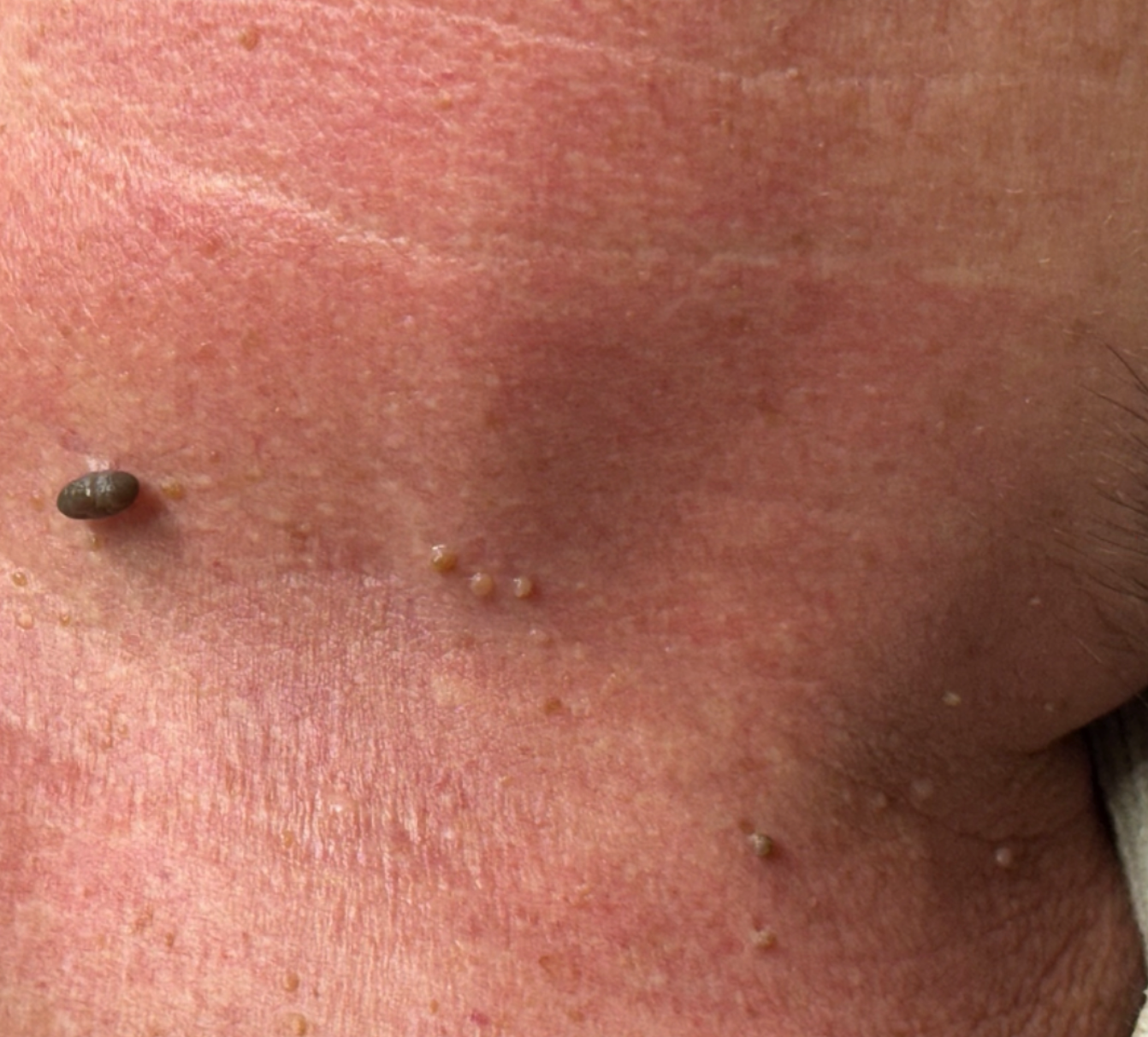
Skin tags
Acrochordons
What is a skin tag?
Soft growths that project from the skin, often on the neck or in skin folds. They can catch on clothes or jewellery. [2]
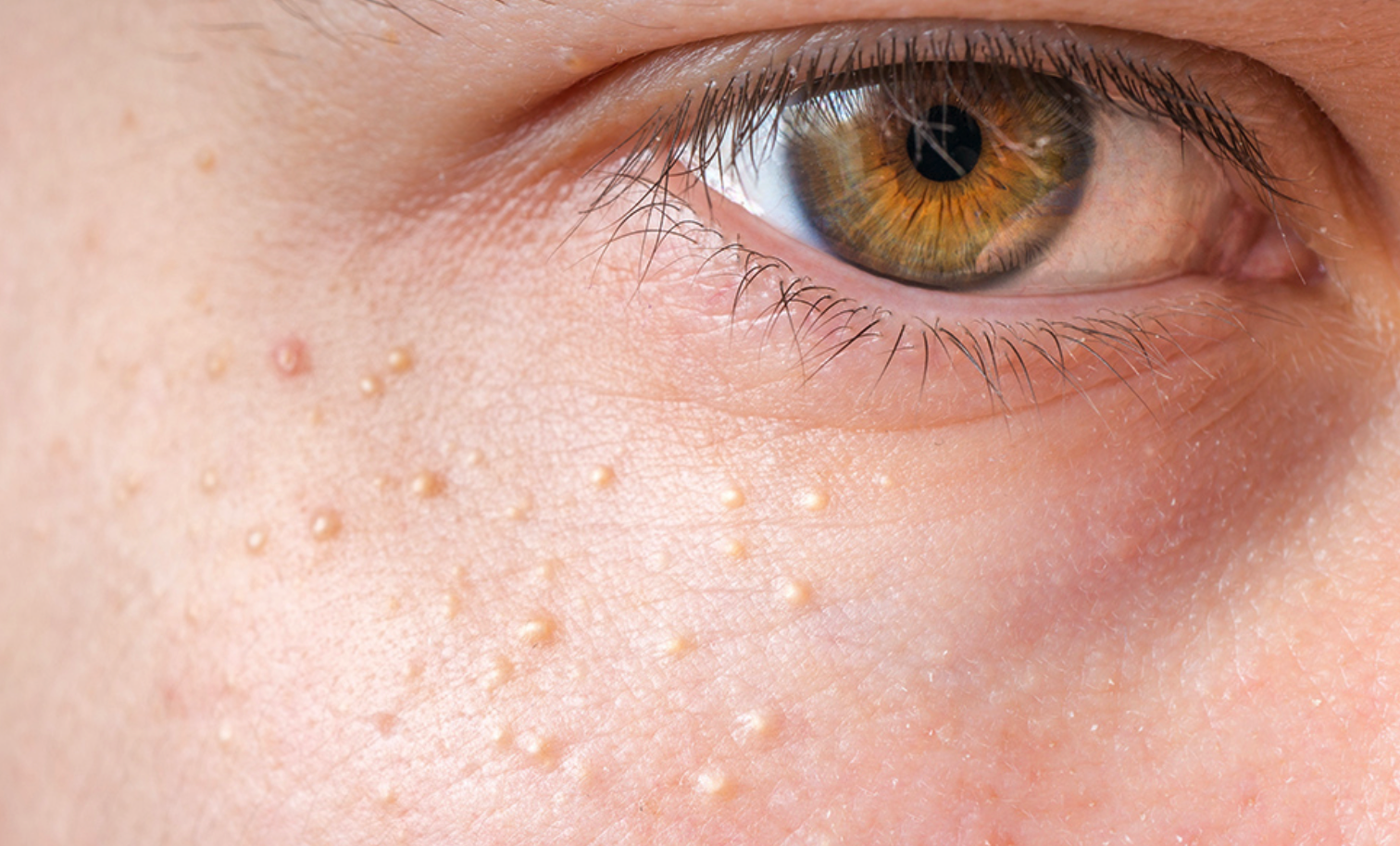
Milia
What are milia?
Tiny white or cream-coloured bumps just beneath the skin, often around the eyes or on the cheeks. They contain keratin, a protein found in skin. [6]
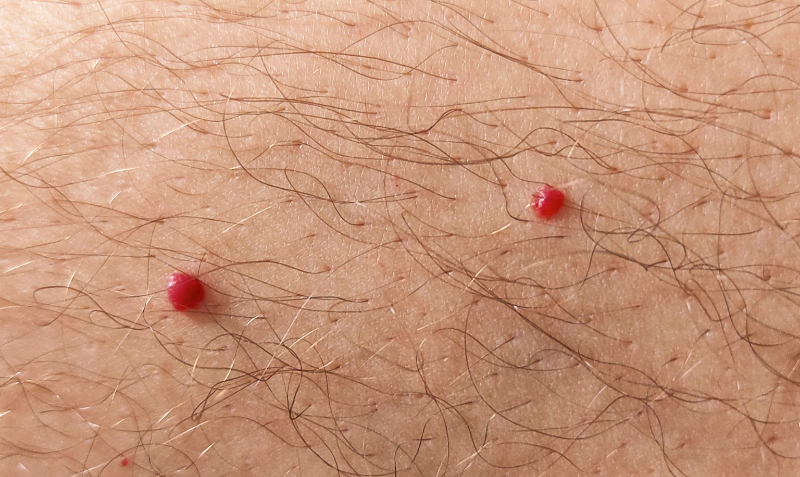
Cherry angiomas
Campbell de Morgan spots
What is a cherry angioma?
Small red, purple or blue raised spots made up of small blood vessels. [7]
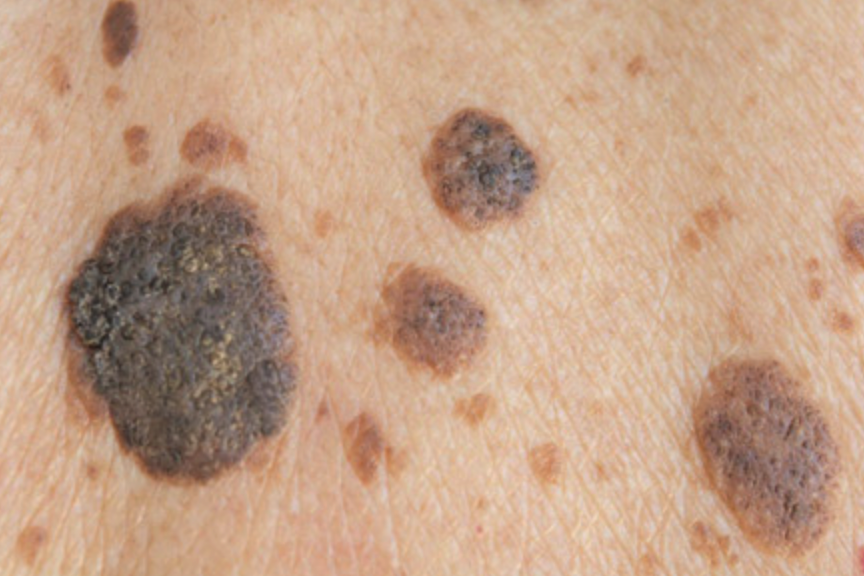
Seborrhoeic keratoses
What is a seborrhoeic keratosis?
Raised growths that can look waxy, rough or stuck on. Their colour varies from skin-coloured to brown or almost black. Some catch or become irritated. [4]
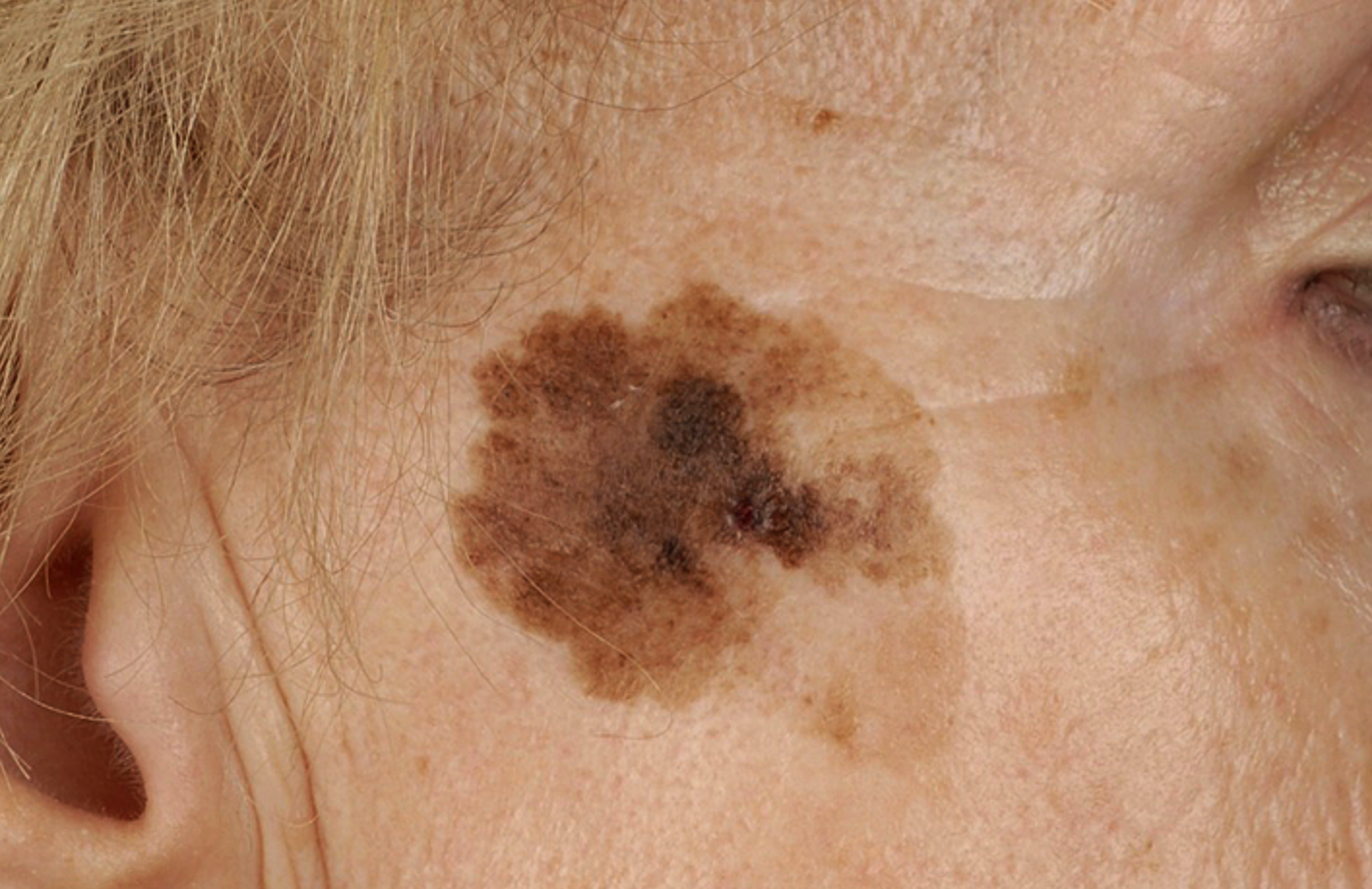
Sun spots / age spots
Solar lentigines
What is a sun spot?
Flat pigmented marks associated with cumulative UV exposure, often on the face or hands. [8]
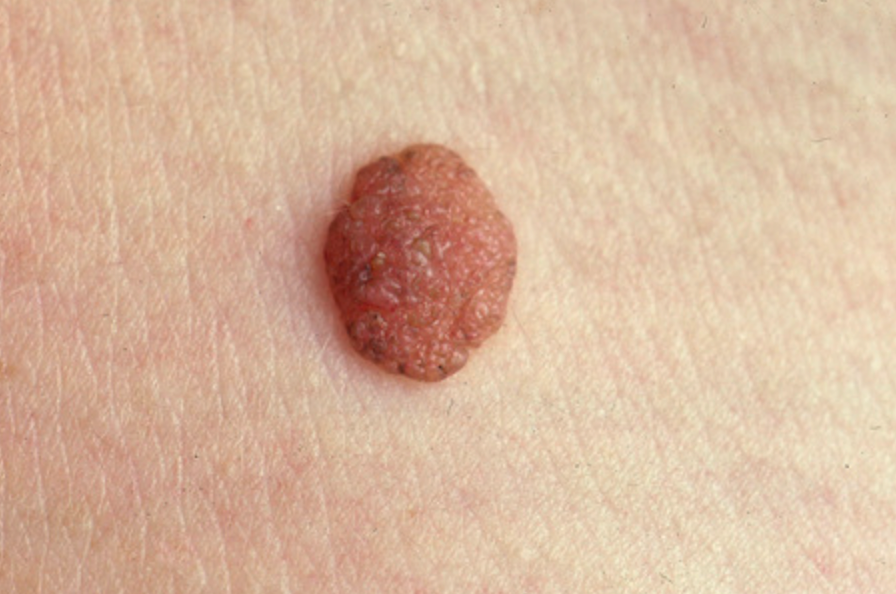
Selected moles
Melanocytic naevi
What is a mole?
Moles may be flat or raised and can vary in colour. Only selected moles are considered for cosmetic removal after an in-person assessment. [1]
Original photographs from the odNOVA website. Warts and verrucas are outside this service.
When medical assessment comes first →Before & after
Treatment and healing.
In photographs.
These original photographs record different stages after treatment. The time shown matters: a photograph taken immediately after a procedure is not a healed result.
Each pair shows one person's experience. Healing, colour change and any remaining mark vary; these photographs do not predict your result.
01Raised lesions on the neck30 minutes after · Early post-procedure appearance+
Early post-procedure appearance
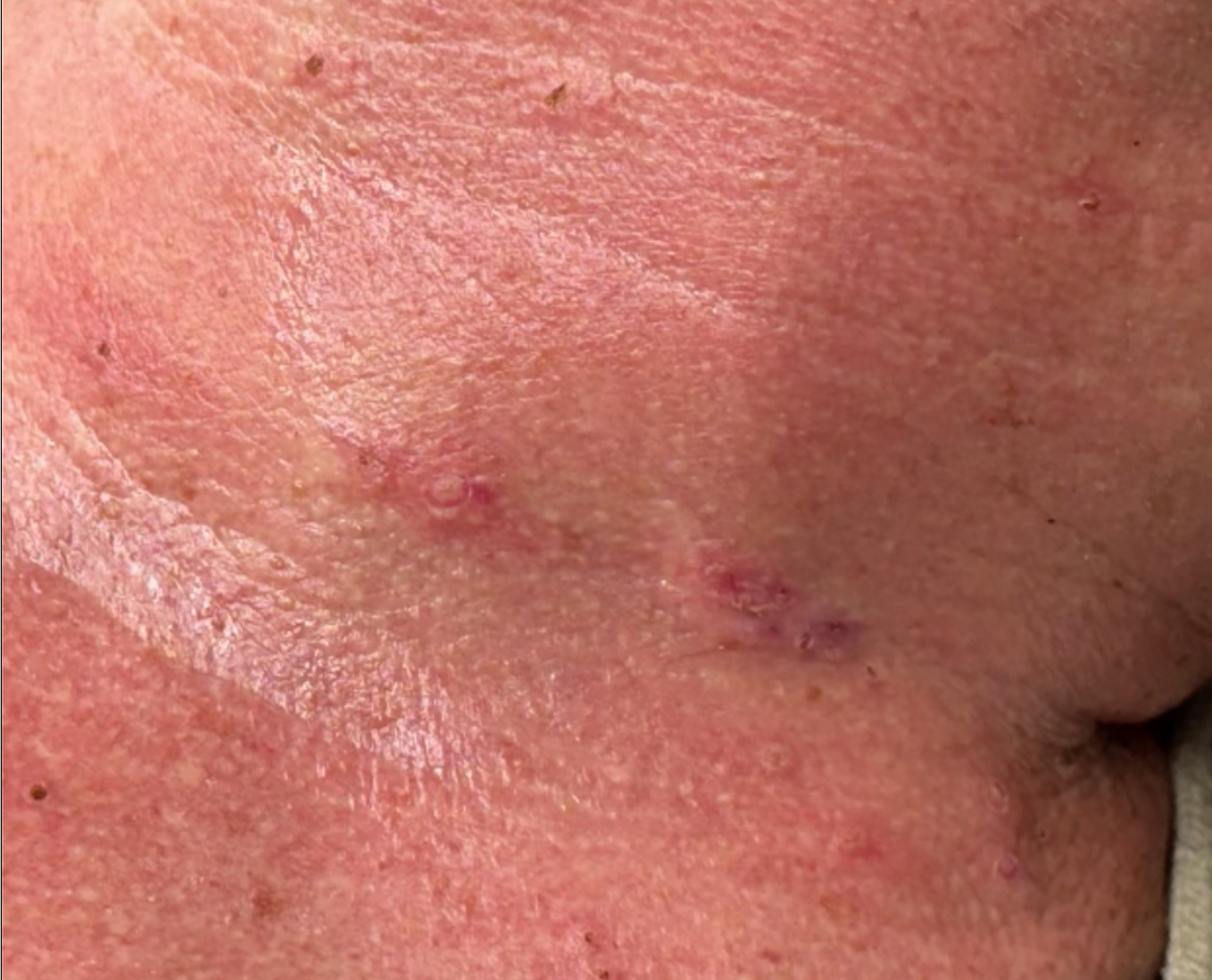
This is an early post-procedure photograph, not a healed result.
02A raised lesion near the brow5 days after · Healing in progress+
Healing in progress
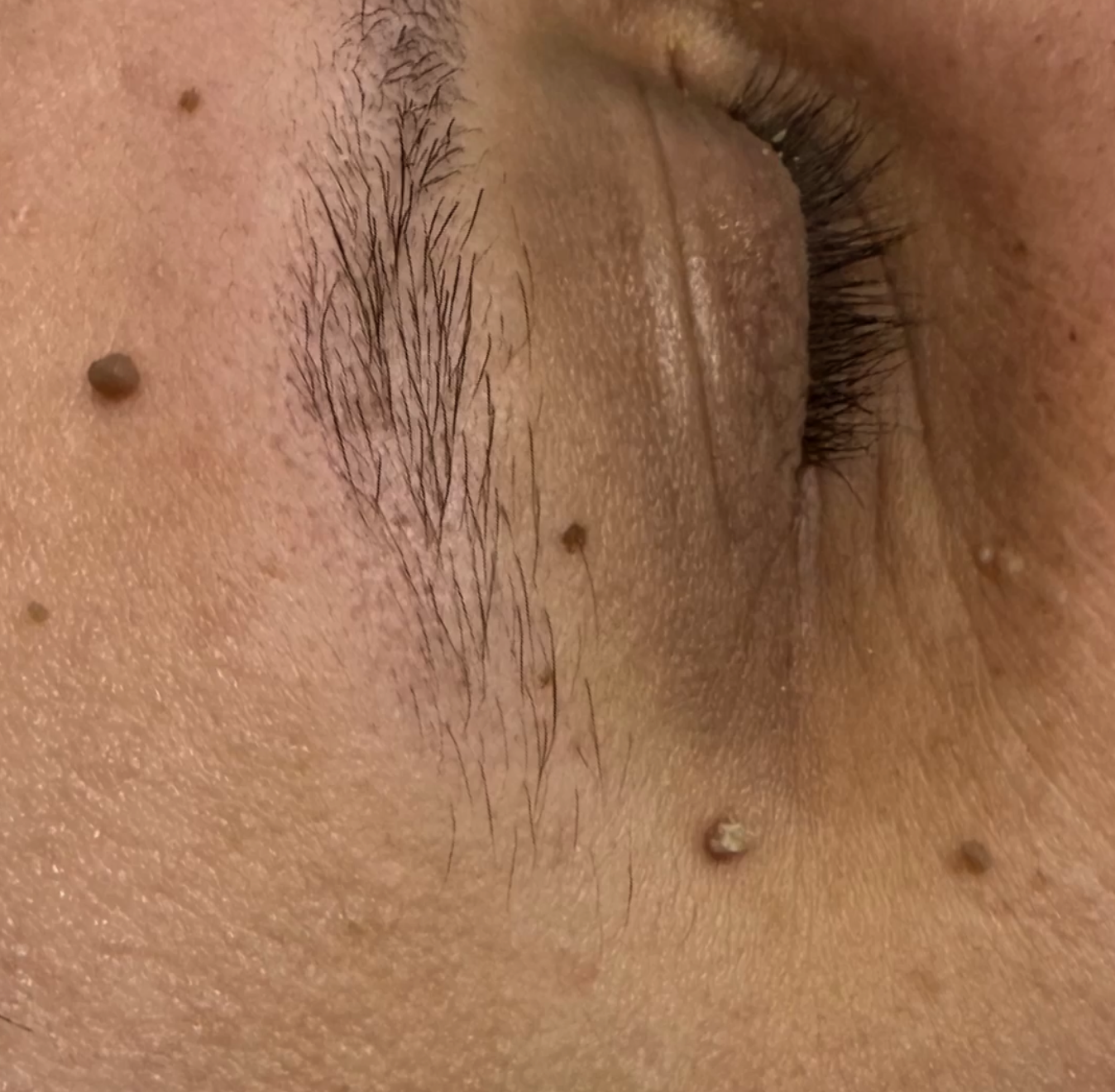
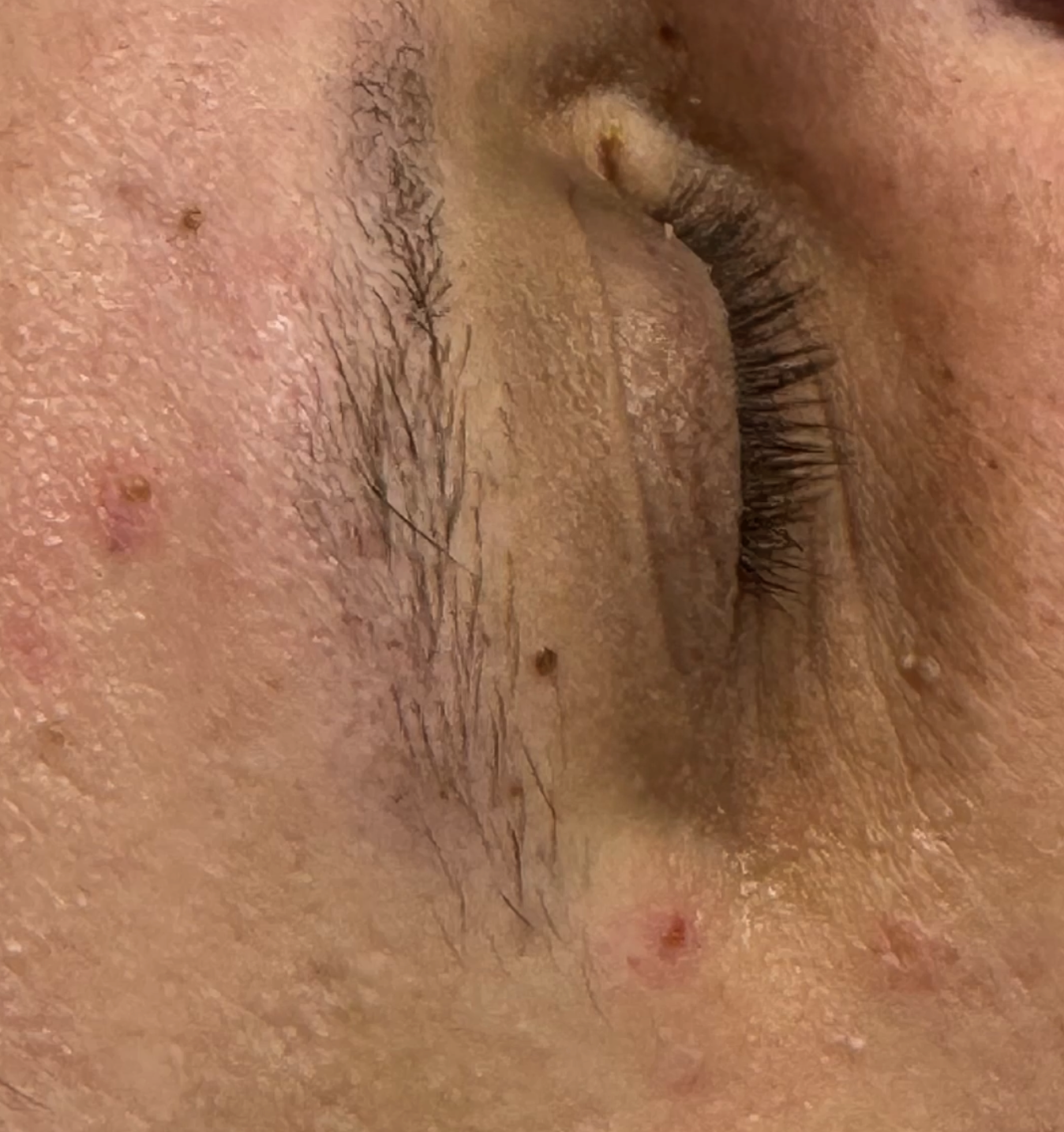
The area is still healing. This photograph does not show the final cosmetic result.
03A raised lesion at the temple7 days after · Healing in progress+
Healing in progress
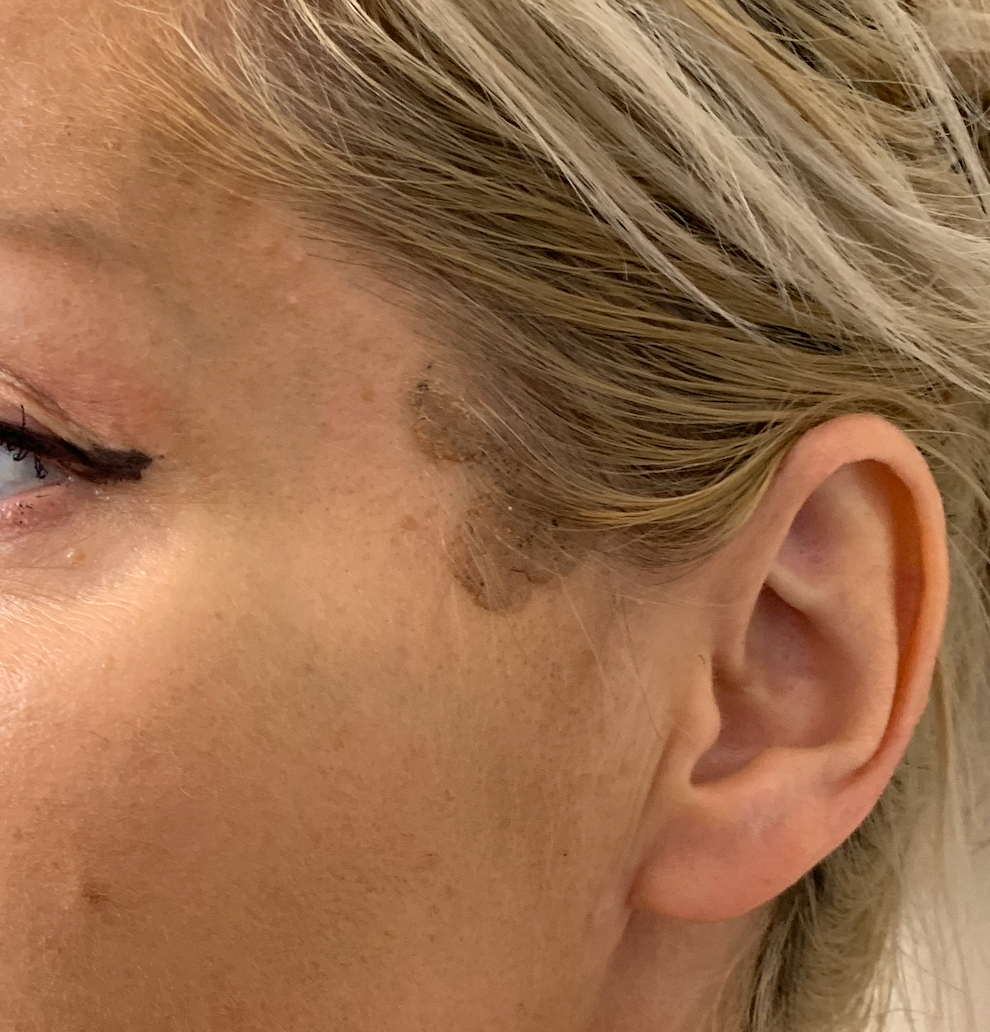
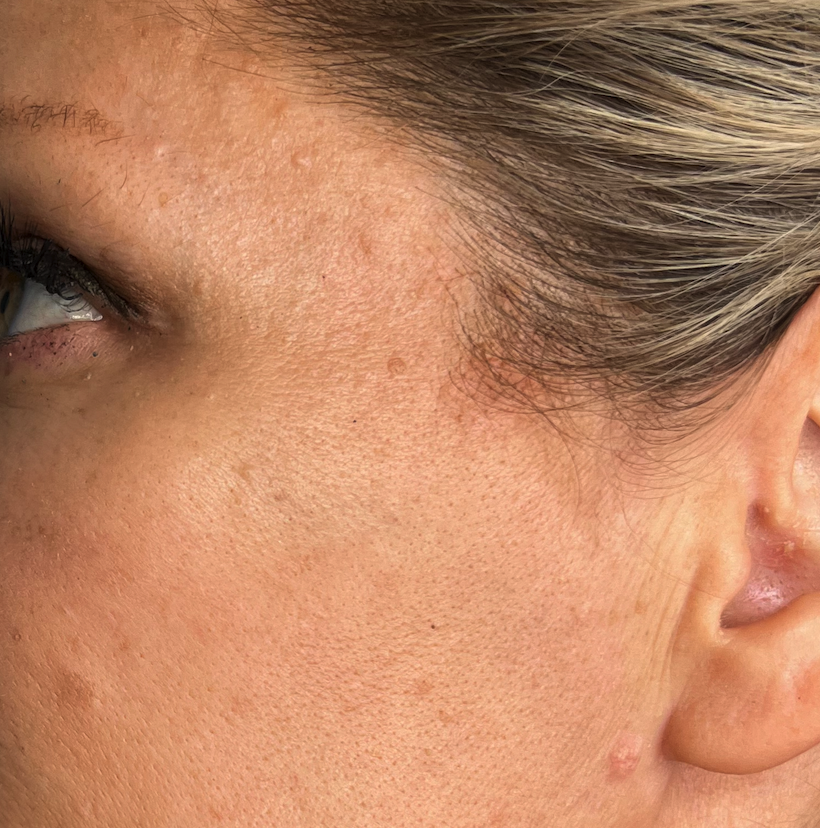
An early healing stage at the temple and hairline, not the final result.
04A raised lesion on the neckImmediately after · Early post-procedure appearance+
Early post-procedure appearance
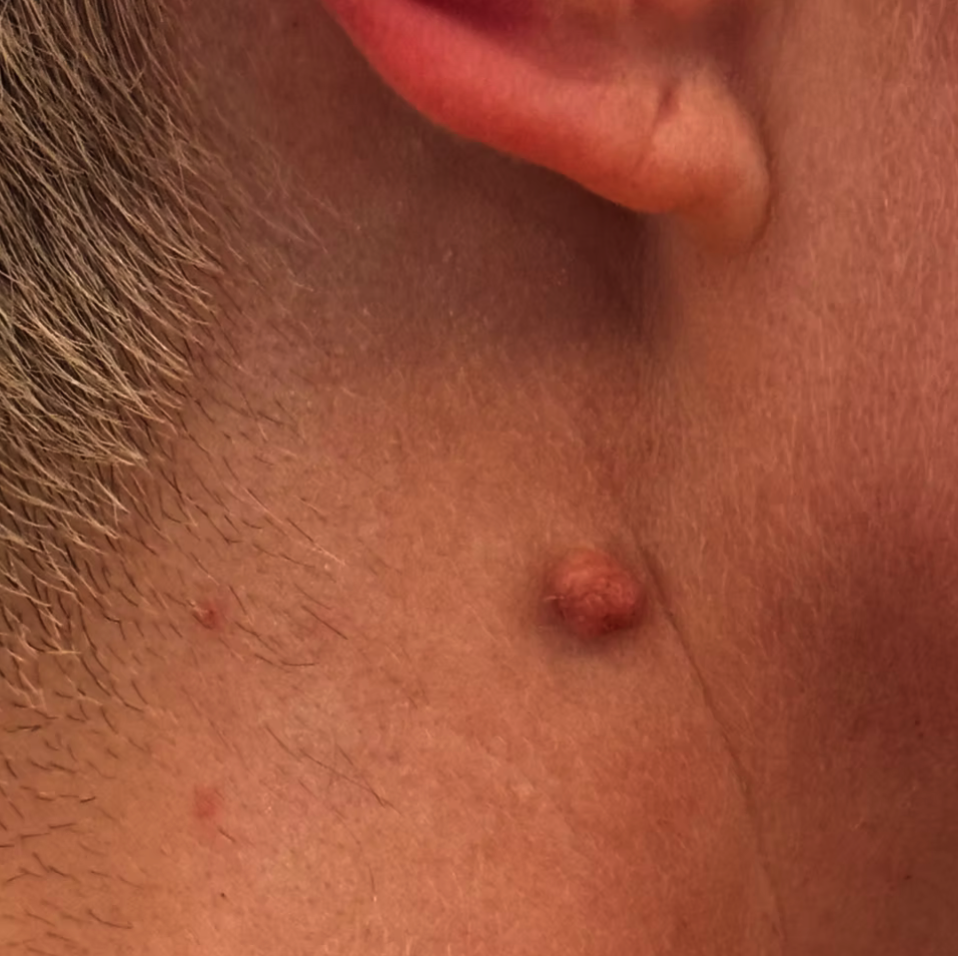
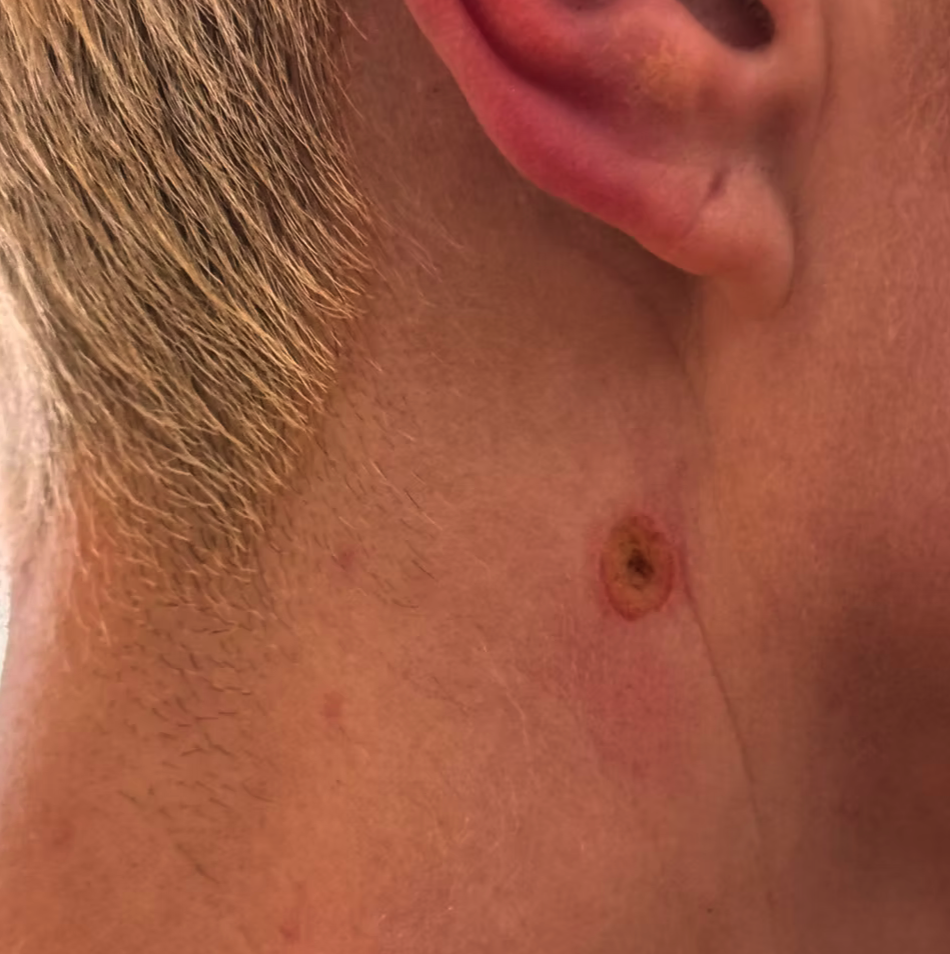
The treatment site has not yet healed. Later colour settling and any remaining mark cannot be judged here.
- Days to a few weeks
The surface
A crust or scab may form and needs to separate naturally.
- Weeks or longer
Changes in colour
Redness or a lighter or darker mark may remain after the surface closes.
- Months
Longer-term appearance
Final cosmetic settling and scar maturation can take longer.
Stages overlap and are not a fixed timetable. The lesion, location, chosen method and your healing response all matter.
Your questions, answered
Your questions about
skin lesion removal
Which skin lesions may be removed, when medical assessment comes first, and what healing and the cosmetic result involve.
odNOVA guide
- 1 You
- 2 Piotr
- 3 Clinical
Choose a question
Which skin lesions can be considered for removal?Piotr answers
Piotr
Selected skin tags, seborrhoeic keratoses, milia, cherry angiomas, solar lentigines and selected moles may be suitable. I examine them in person before recommending removal. Warts and verrucas are outside this service.
What may be considered
Which lesions can be considered?
You may also see skin tags called acrochordons, moles called melanocytic naevi, and sun or age spots called solar lentigines. The six groups above explain their differences.
When should I see my GP or a dermatologist first?Piotr answers
Piotr
New, changing, bleeding without a clear cause, irregular, persistently unhealed, suspicious or uncertain lesions need medical assessment first. I do not remove them.
When cosmetic removal does not go ahead
Some marks need a different first step.
Cosmetic removal does not go ahead when a lesion is:
- new;
- changing;
- bleeding without a clear cause;
- irregular;
- persistently unhealed;
- suspicious;
- uncertain in identity.
A lesion that catches on clothing or jewellery, or rubs, can still be assessed. A lesion that has begun to hurt, bleed without a clear cause, grow or change on its own, or has not healed, needs GP or dermatology assessment first.
Cosmetic removal at odNOVA does not include laboratory examination of the tissue. If a lesion needs testing, GP or dermatology assessment comes first so that an appropriate biopsy can be arranged. Removing a mark cosmetically cannot confirm that it was harmless.
A mole, age spot or other pigmented mark that has become itchy, inflamed, sore or otherwise changed needs GP or dermatology assessment first, even if you think clothing or rubbing caused it.[1]
A rough, scaly or crusty sun-damaged patch may be something different and needs medical assessment first.
If any of these features applies, arrange medical assessment before considering cosmetic removal.[1]
Knowing when not to treat is part of the service.
What happens before a skin lesion can be removed?Piotr answers
Piotr
I need to examine the lesion in person before deciding whether cosmetic removal is appropriate. You can bring a photograph showing how it looked previously, but a current photograph alone cannot establish suitability.
Assessment before removal
A mark is not a diagnosis.
A message or photograph can help explain what is bothering you, but it cannot replace examination. If a mark is uncertain or concerning, I recommend GP or dermatology assessment first.
Do not try to cut, burn or chemically remove a mole, skin tag or uncertain lesion yourself. Home removal can cause bleeding, infection or scarring and may delay proper assessment.
What is checked at my assessment?Piotr answers
Piotr
I examine the lesion, using a dermatoscope where appropriate to look more closely at its structures. Your skin and previous healing also matter when considering removal.
What happens at the assessment
The lesion and the person both matter.
It helps to know when you first noticed the lesion, whether it has changed and whether it catches, rubs or causes symptoms. Please tell me about your medicines, previous healing, unusual scars and any tendency to develop dark or light marks.
These details help me assess both the lesion and how your skin may heal after removal.
Does an assessment mean I will have treatment?Piotr answers
Piotr
No. We may consider removal, decide to leave the lesion alone, or discuss why GP or dermatology assessment should come first. You can take time, defer or decline treatment.
The decision after assessment
Removal is one possible outcome.
The assessment can lead to one of three sensible decisions:
- the lesion appears suitable for cosmetic removal and you may consider treatment;
- the lesion is left alone because the likely benefit does not justify the healing, pigment or scarring trade-off; or
- you are advised to see your GP or a dermatologist before any cosmetic treatment is considered.
If treatment is an option, I explain the intended result, the limits, the risks, the likely healing process and the alternatives before you decide. You are under no obligation to proceed and may defer or decline treatment.
Planning removal and cost
The approach depends on the lesion, its location and how the area is likely to heal. Before you agree, I explain the proposed method, what it involves and what it may leave behind. Smaller lesions start from £100 and more complex lesions from £125; I confirm the cost of your plan before treatment. View lesion fees.
The value of an assessment
A useful consultation does not have to end with a procedure.
At the consultation, I assess the skin lesion and explain whether removal or further investigation is appropriate.
How long should I allow for the appointment?Piotr answers
Piotr
Removing a single lesion may take around 5–10 minutes, but your appointment is booked for about an hour.
What does removal feel like?Piotr answers
Piotr
The area is numbed with a local anaesthetic injection, so you should not feel pain during removal. The way the lesion is removed depends on what is being treated.
What result can I realistically expect?Piotr answers
Piotr
The aim is removal or visible reduction of a suitable lesion. It may not clear completely, and a mark, colour change or scar can remain. We discuss whether that trade-off is worthwhile for you.
What might remain after removal?
Removal does not mean invisible skin.
Removing a lesion leaves skin that needs to heal. The treated area may remain lighter or darker, and a scar can remain. It may be flat, raised or slightly indented; that depends on the procedure, location and how your skin heals.[9] The likely improvement needs to be weighed against the mark treatment could leave. Some lesions need further treatment; read about persistence and recurrence.
Will removing a mole also remove the hair growing from it?
Hair may remain or regrow after a mole is removed. Removing the visible lesion does not necessarily remove the hair follicle beneath it, so a smoother surface does not guarantee that the hair will disappear.[12]
How long will the area take to heal?Piotr answers
Piotr
Crusting or scabbing may last from days to a few weeks. Redness or colour change can last longer, and final cosmetic settling or scar maturation can take months. The exact course depends on the lesion, site, procedure and your response.
Healing and recovery
The area needs time to settle.
Surface healing and the final appearance are different stages. The lower legs can take longer to heal than other sites.[15] Even after the surface has healed, redness or a change in colour may take months to settle. The size and depth of the treated area, its location and your health all affect recovery.
See the stages of healing · View the original before-and-after photographs
Can a cherry angioma look darker after treatment?
The treated spot may darken and form a small crust before the skin beneath it heals. Let the crust separate naturally. A darker appearance alone cannot tell you whether healing is normal; increasing pain, redness or discharge needs assessment.[16]
What are the risks for my skin?Piotr answers
Piotr
A lasting mark, lighter or darker skin colour or a scar can remain. Bleeding, infection, incomplete removal and regrowth are also possible. I explain the risks for the proposed procedure, taking your skin, health, medicines and previous healing into account.
Healing reactions and possible complications
Healing, skin tone and possible complications.
The relevant risks depend on the lesion, its location and the method considered. Before treatment, the discussion may include:
During healing
- redness, stinging, swelling or tenderness;
- a scab or crust;
- temporary darkening or lightening of the skin.
Possible complications and lasting changes
- a persistent mark or scar;
- incomplete removal or regrowth;
- infection;
- bleeding.
Your skin tone, the location of the lesion and any previous raised scars affect the assessment. The chest, shoulders and upper back are more prone to raised scarring.[11] In some cases, a harmless lesion is better left alone if removal could leave a more noticeable scar.
Results and healing cannot be guaranteed. Before you decide, you should know the risks relevant to the exact method and how concerns about healing would be assessed.
When treatment may be unsuitable or deferred
Suitability is broader than the lesion itself.
Even when the lesion itself appears suitable, treatment may be unsuitable or need to be deferred where the skin condition, skin tone, medical history, medicines, healing or scarring risk, pregnancy or breastfeeding change the balance of benefit and risk.
Their importance depends on the procedure being considered and your individual health. Tell me about your health, medicines and previous scarring so the decision is based on the whole picture, not the appearance of the lesion alone.
How should I care for the area after treatment?Piotr answers
Piotr
Follow the written instructions for your procedure and let any scab separate naturally. Contact odNOVA if healing worries you or anything does not feel right; some problems need assessment by your GP, a dermatologist or NHS services.
Aftercare
Aftercare must match the procedure actually chosen.
Follow the written instructions for the exact procedure.
- Keep the area clean and dry.
- Let any scab separate naturally; do not pick, scratch or peel it.
- Avoid clothing, straps or jewellery that rub directly over the treated area while it heals. If the site needs a protective dressing, follow the dressing advice for your procedure.[13]
- Avoid make-up over the area until healed.
- Keep the healing area covered or shaded from the sun. Once the surface has healed, use a broad-spectrum sunscreen of SPF 30 or higher. UV exposure can darken a healing mark.[10]
Contact odNOVA if healing worries you or anything does not feel right. A review may be offered. Some problems need assessment by your GP, a dermatologist or NHS services. If a lesion persists, returns or changes, it should be reassessed before further treatment.
Could the lesion return or need another treatment?Piotr answers
Piotr
Yes. A lesion may not clear completely or may regrow, and another can develop elsewhere. A persistent or returning lesion needs reassessment before more treatment. If it has changed, arrange GP or dermatology assessment first.
Repeat treatment and recurrence
Some lesions need more than one treatment.
I reassess a persistent or returning lesion before suggesting further treatment. If it has changed, GP or dermatology assessment comes first. Removing one lesion does not prevent another from developing elsewhere.
Can skincare affect whether milia return?
Some heavy creams or ointments can contribute to milia, but skincare is not the only cause. If new milia keep appearing, the products used around the area are worth reviewing. Removing the existing bumps does not prevent new ones from developing.[14]
What if I prefer to leave it alone?Piotr answers
Piotr
If assessment shows the lesion can reasonably be left alone, you can choose not to have treatment and keep an eye on it. If it changes, seek GP or dermatology assessment before considering cosmetic treatment. We can also discuss whether a different approach elsewhere would be more appropriate.
Alternatives and no treatment
Sometimes the best decision is to leave it alone.
If removal would leave a mark that bothers you more than the original lesion, leaving it alone can be a sensible choice. Another removal approach elsewhere may also be more suitable. If the lesion changes, arrange GP or dermatology assessment before cosmetic treatment.
Question index
All your questions, by topic.
Open a topic and choose a question to go straight to its answer.
Browse all 33 questions
Types of skin lesion8 questions
Assessment and suitability5 questions
Your decision and appointment6 questions
Results, marks and recurrence7 questions
Healing and aftercare5 questions
Risks and complications2 questions
Can a webpage or photograph tell me whether my lesion is safe?
No. I need to examine it in person. A message or photograph cannot confirm suitability. Read about assessment.
Which lesions may be considered for removal?
The service covers six selected groups: skin tags, seborrhoeic keratoses, milia, cherry angiomas, solar lentigines and selected moles. Warts and verrucas are excluded. See the groups.
Is every mark that bothers me suitable for removal?
No. New, changing, bleeding without a clear cause, irregular, persistently unhealed, suspicious or uncertain marks need medical assessment first. Check which changes matter.
Does an assessment mean treatment will happen?
No. You can take time, defer or decline treatment. Read about the decision after assessment.
Will removal leave a mark or scar?
It can. A mark, colour change or scar may remain. Read about the likely result and what may remain.
How long does healing take?
Surface healing can take days to a few weeks; colour changes and final settling can take longer. Read the healing timeline.
Might I need more than one treatment?
Sometimes. A lesion can persist or regrow and needs reassessment before another treatment. Read about repeat treatment.
What are the main risks?
Risks include a persistent mark or scar, pigment change, bleeding, infection, incomplete removal and regrowth. Read the risk explanation.
What should I do after treatment?
Follow your written care plan and let any scab separate naturally. Read aftercare and when to seek medical advice.
What if I decide not to proceed?
You can decline treatment. If assessment shows the lesion can reasonably be left alone, you can keep an eye on it; if it changes, seek GP or dermatology assessment. Read about alternatives and no treatment.
References & sources
NHS, NICE and British Association of Dermatologists guidance supports the medical-assessment and safety context. DermNet provides background for the short category descriptions. None of these sources diagnoses your skin from a photograph or confirms that a particular removal method is appropriate for you. The photographs illustrate individual examples, not research evidence of a guaranteed result.
View all 16 references
- NHS — Moles. Available at: nhs.uk/conditions/moles. (Accessed: 9 September 2026).
- NHS — Skin tags. Available at: nhs.uk/conditions/skin-tags. (Accessed: 9 September 2026).
- NICE — Suspected cancer: recognition and referral (NG12). Available at: nice.org.uk/guidance/ng12.
- British Association of Dermatologists / SkinHealthInfo — Seborrhoeic keratosis. Available at: skinhealthinfo.org.uk/condition/seborrhoeic-keratosis. (Accessed: 9 September 2026).
- NHS — Cuts and grazes. General wound warning signs and urgent/emergency routes; not procedure-specific aftercare. Read NHS guidance (Accessed: 9 September 2026).
- DermNet — Milia. Background for the category description, not a recommendation for a particular procedure at odNOVA. Read the clinical information (Accessed: 9 September 2026).
- DermNet — Cherry angioma. Background for the category description, not a recommendation for a particular procedure at odNOVA. Read the clinical information (Accessed: 9 September 2026).
- DermNet — Solar lentigo. Background for the category description, not a recommendation for a particular procedure at odNOVA. Read the clinical information (Accessed: 9 September 2026).
- University Hospitals Sussex — Curettage and cautery or shave excision. Read the source
- American Academy of Dermatology — How to prevent keloid scars. Read the source
- British Association of Dermatologists — Keloids. Read the source
- PubMed — publication record 7633770; hair after mole removal. Read the source
- Cambridge University Hospitals — Post-operative advice for patients who have had skin surgery. Read the source
- Cleveland Clinic — Milia. Read the source
- University Hospitals Bristol — Skin surgery patient information (2016). Read the source
- Clinical report on laser treatment of cherry angiomas (PMC6806638). Read the source
This page provides general information about face-to-face assessment and possible cosmetic removal of selected skin lesions. It is not individual medical advice and it cannot identify or declare a lesion safe. New, changing, bleeding without a clear cause, irregular, persistently unhealed, suspicious or uncertain lesions are not removed at odNOVA; you will be advised to see your GP or a dermatologist.